Analytical Methods · 2 MIN READ
What Does HPLC Purity Actually Tell You?
A purity of 99 % sounds like the whole story. It is one answer to one question: how much of the UV signal comes from the main compound.
Yuri Parounakian · 8 Aug 2026
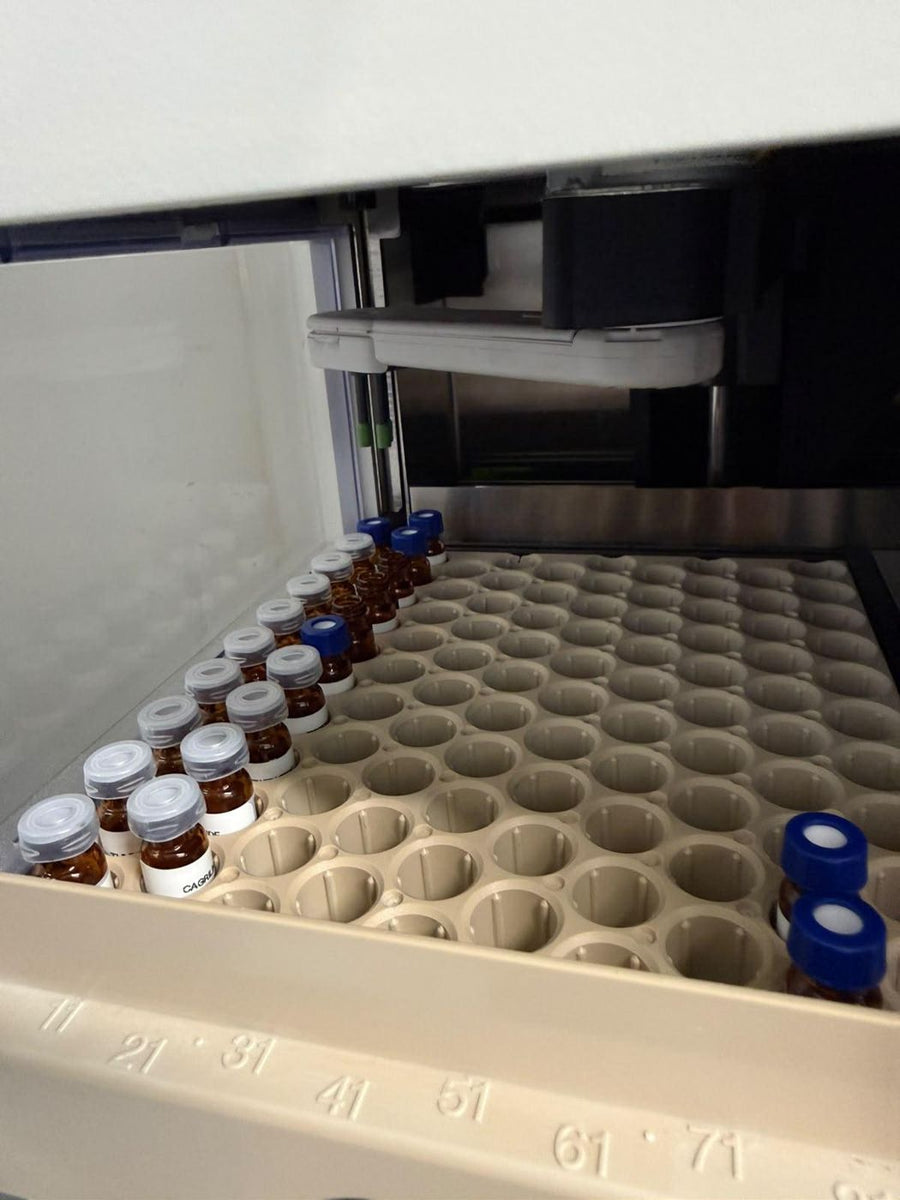
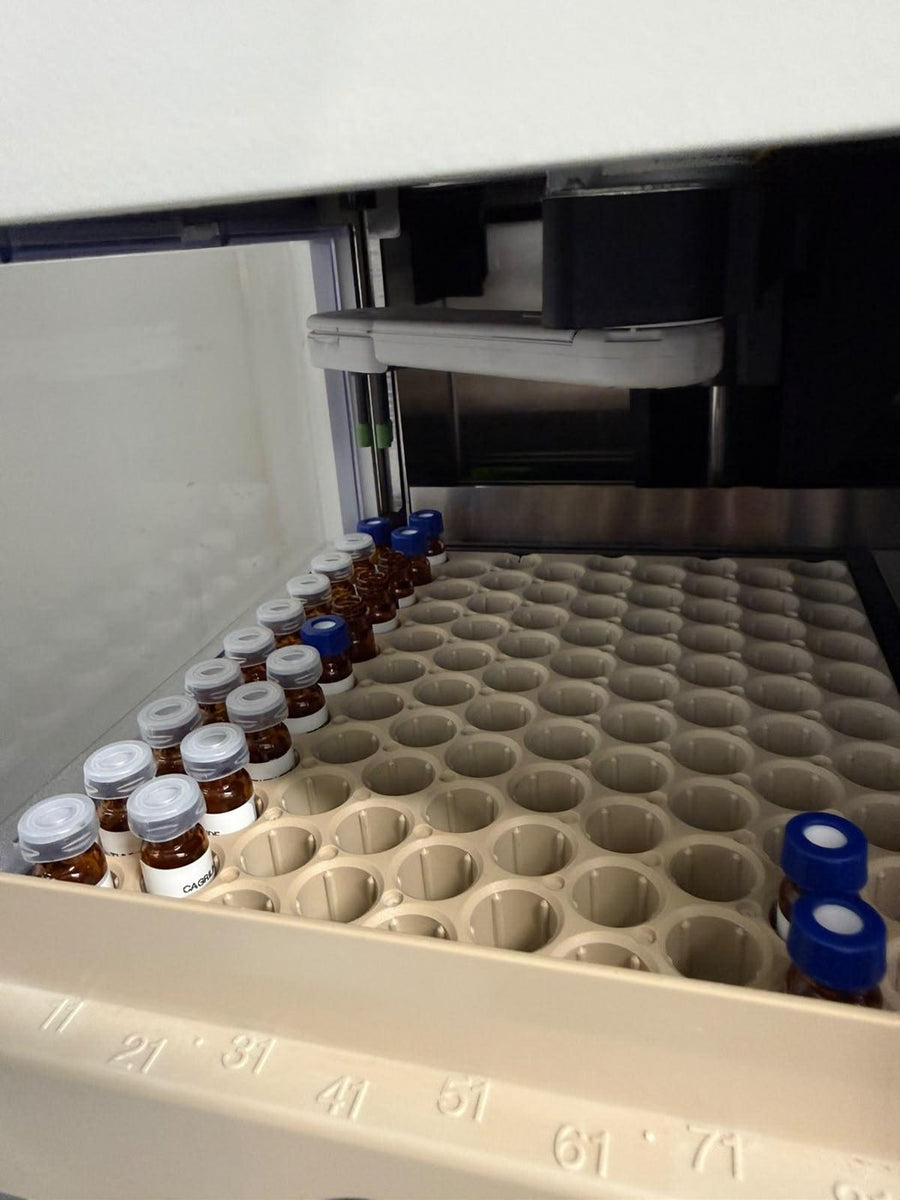
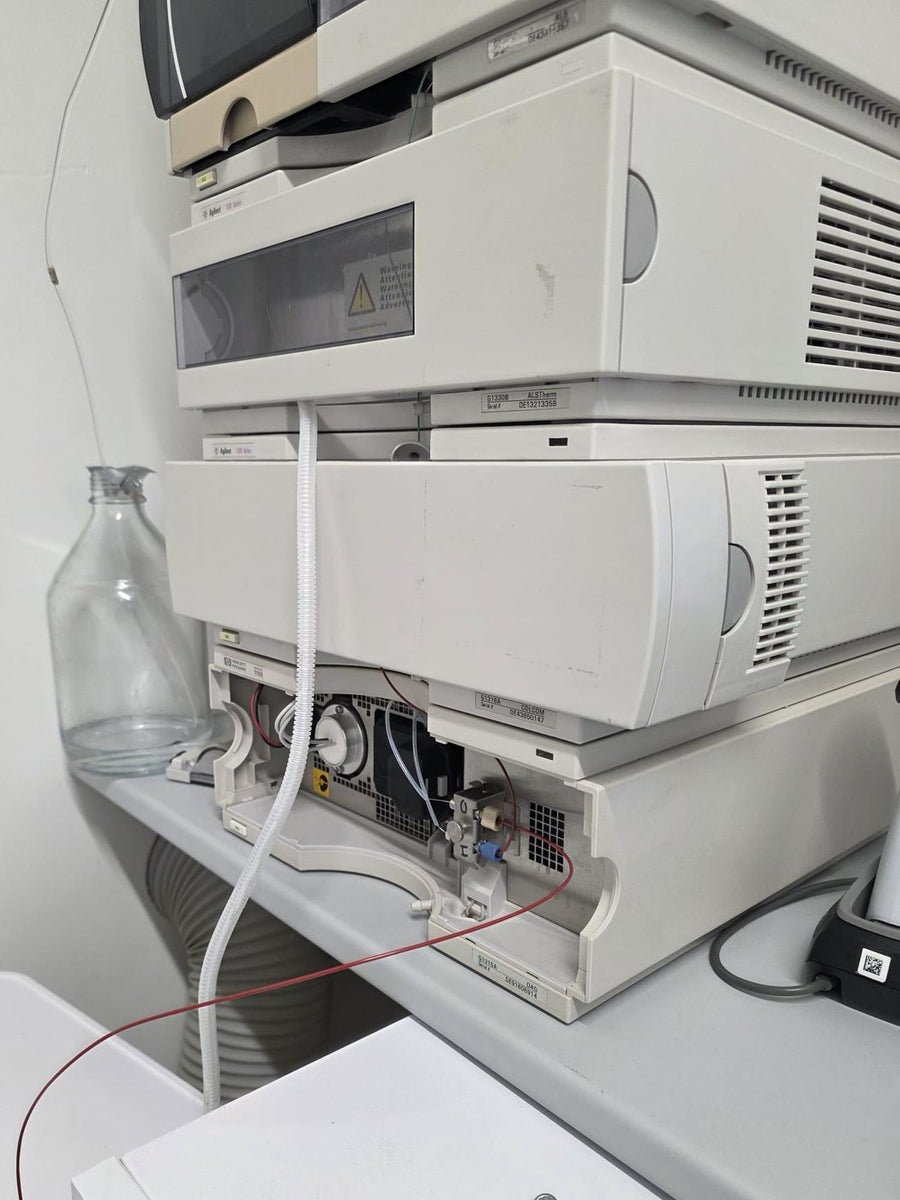
A purity number starts with a chromatogram. Your sample goes through our HPLC, the column separates what is in it, and a UV detector draws each compound as a peak.
What the number measures
We read the chromatogram at 214 nm, where every peptide bond absorbs light. Purity is the area of the main peak as a share of all sample-related peaks. A result of 99.40 % means that 99.40 % of that UV signal comes from the main compound.
Small peaks count
At full scale the main peak dominates. Zoom in twenty times and the rest of the vial shows up. Every peak from 0.10 % is listed on your report with its retention time; smaller ones still count towards purity and are shown together as one sum.
Blank runs on both sides
Blank runs go before and after the samples. A peak that also shows up in a blank comes from the system, not from your vial, so it is not counted against you. A peak in the blank after your sample would mean carry-over, and we would see it.
What purity does not tell you
- Whether the main peak is the compound on the label. That is identity, measured by mass.
- How many mg are in the vial. That is content, measured against a reference standard.
- What share of the powder is peptide. Salt and water are in the powder too, and they are not counted in the purity.
Read more in Purity, Identity and Content Are Not the Same Thing, or see what we test on Testing Services.