Analytical Methods · 2 MIN READ
Why HPLC Alone Cannot Confirm Compound Identity
One clean peak tells you the sample is clean, not what the peak is. For that you need the mass.
Yuri Parounakian · 8 Aug 2026

An HPLC run can give a beautiful chromatogram: one tall peak and almost nothing else. It still does not prove that the peak is the compound on the label.

What retention time can and cannot do
Every compound comes off the column at its own moment, its retention time. With the same method, the same compound comes off at the same time. But two different molecules can come off at nearly the same time. A retention time is a strong clue, not a fingerprint.
What the mass adds
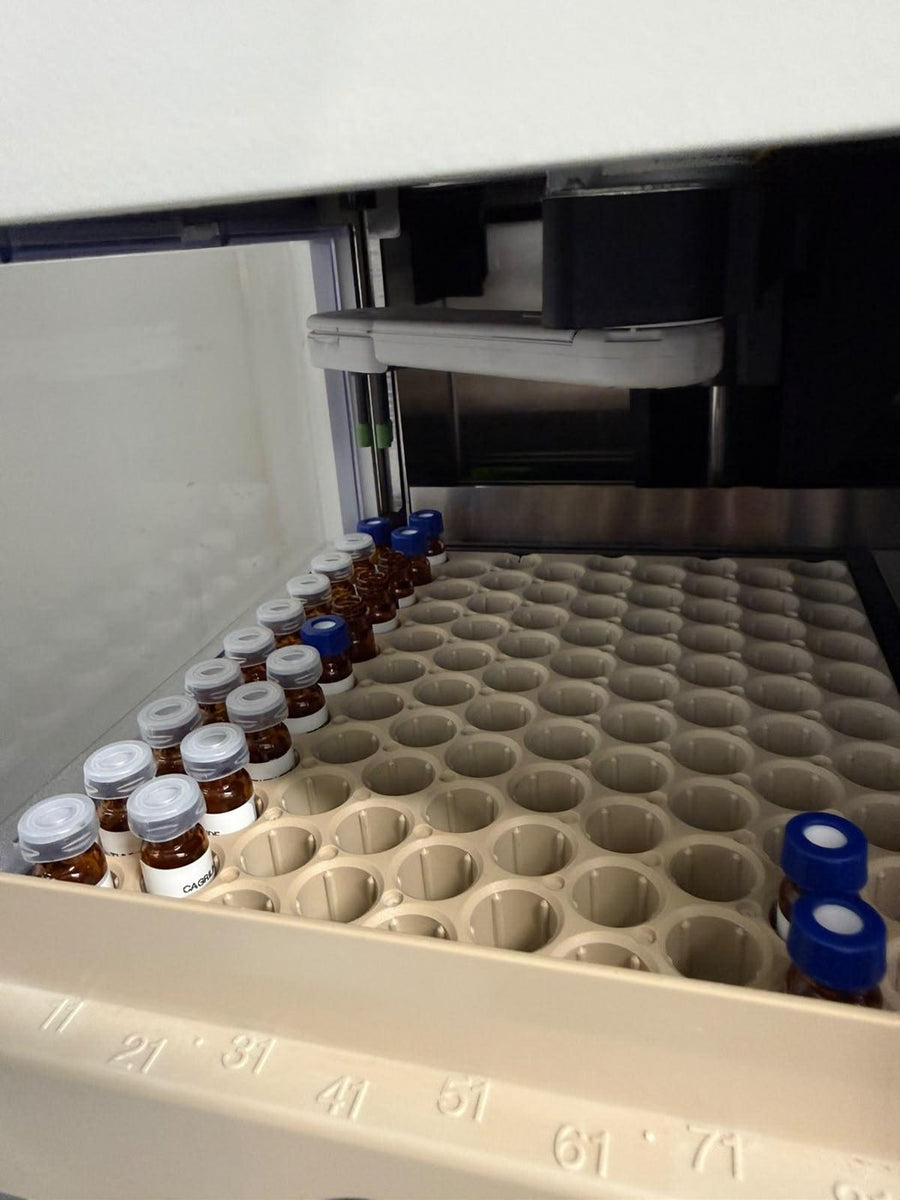
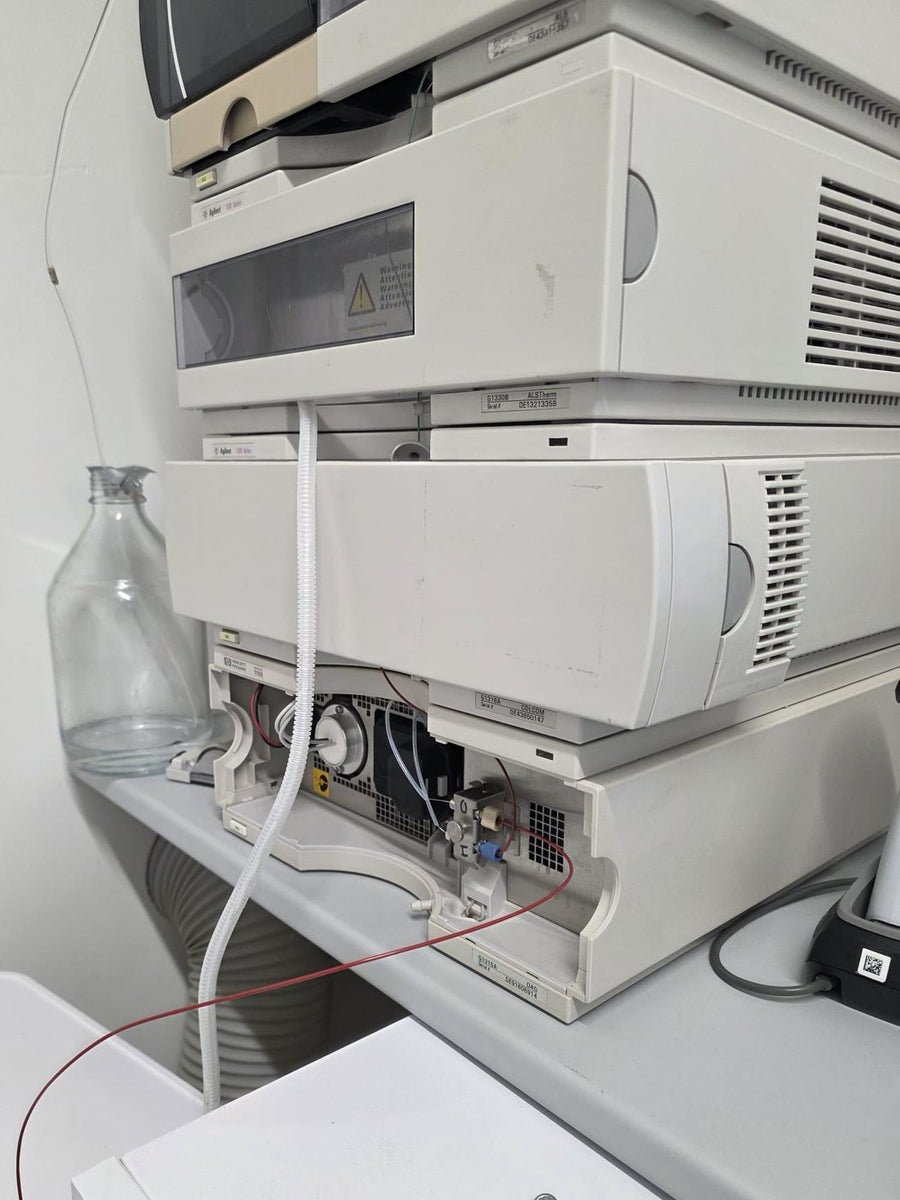
Our Agilent 6130 mass spectrometer measures the mass of what comes off the column. A peptide picks up several protons and shows up at several charges at once: as 4+, 5+, 6+ and 7+ for TB-500, for example. Together those signals give one mass, which must match the expected mass within a fixed tolerance.

Two checks, both required
We confirm identity only when the mass and the retention time both match our reference standard for that compound. If the mass matches but the retention time does not, or the other way round, the report says so.
What mass cannot see
Some compounds, such as ipamorelin and SS-31, contain D-amino acids, mirror images of the usual building blocks. They have exactly the same mass, so a mass spectrometer cannot tell them apart. The retention time against our reference standard is then the second check.
See how the HPLC works in Where your sample is separated: our HPLC, or choose Identity & Content.