Inside the Lab · 1 MIN READ
What happens when your vial arrives
Your vial gets a code before anything else happens to it. What we do between your package and your report.
Yuri Parounakian · 4 Nov 2026

Your vial gets a code before anything else happens to it. From then on, every step links back to that code.
The package

We open your package and match each vial to your order by its Sample ID. That is why the label on your vial matters: it is the first thing we check.
Logged on arrival

Each vial gets its own code, a photo and a seal check the moment it reaches the lab. The photo of your vial is on your COA, so you can see what we received.
Weighed and dissolved

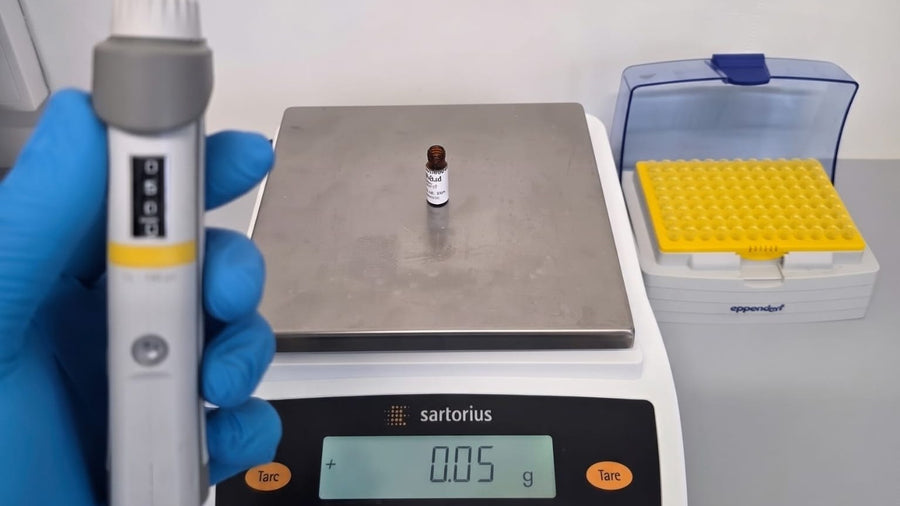
We prepare your sample by weight, so every number starts from a known amount. The solution then goes into HPLC vials.


Into the rack

Then your sample goes to the autosampler, between blank runs. From here the instrument takes over: read Where your sample is separated: our HPLC.
Your report
Fixed, versioned rules propose the result. An analyst checks it and releases it. Your COA appears in your Client Portal 3–5 business days after your vial arrives, or within 24 hours with Rush.