Sample & Quality · 2 MIN READ
What Can Influence Peptide Purity Results?
Two labs, two numbers, both honest. The method, the column and the vial's history all leave a trace in the result.
Yuri Parounakian · 8 Aug 2026
Send the same peptide to two labs and you may get 98.9 % from one and 99.4 % from the other. That does not have to mean that one of them is wrong.

The separation
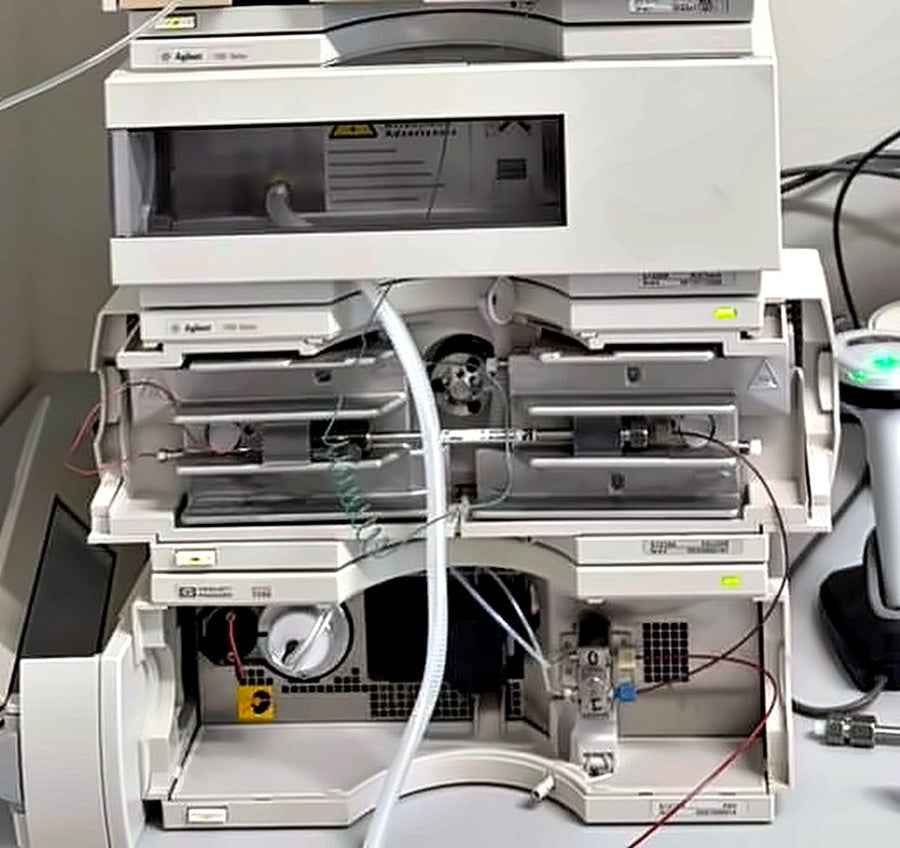
HPLC can only report what it separates. Column, gradient, solvents and temperature decide how far apart two compounds come off. If an impurity comes off at almost the same moment as the main compound, the two merge into one peak, and the sample looks cleaner than it is. That is called co-elution.
The wavelength and the limits
We calculate purity at 214 nm, where every peptide bond absorbs. A lab that reads at another wavelength sees the peaks in other proportions. And a lab that only counts peaks above 0.5 % will report a higher purity than one that counts down to 0.10 %.
The vial itself
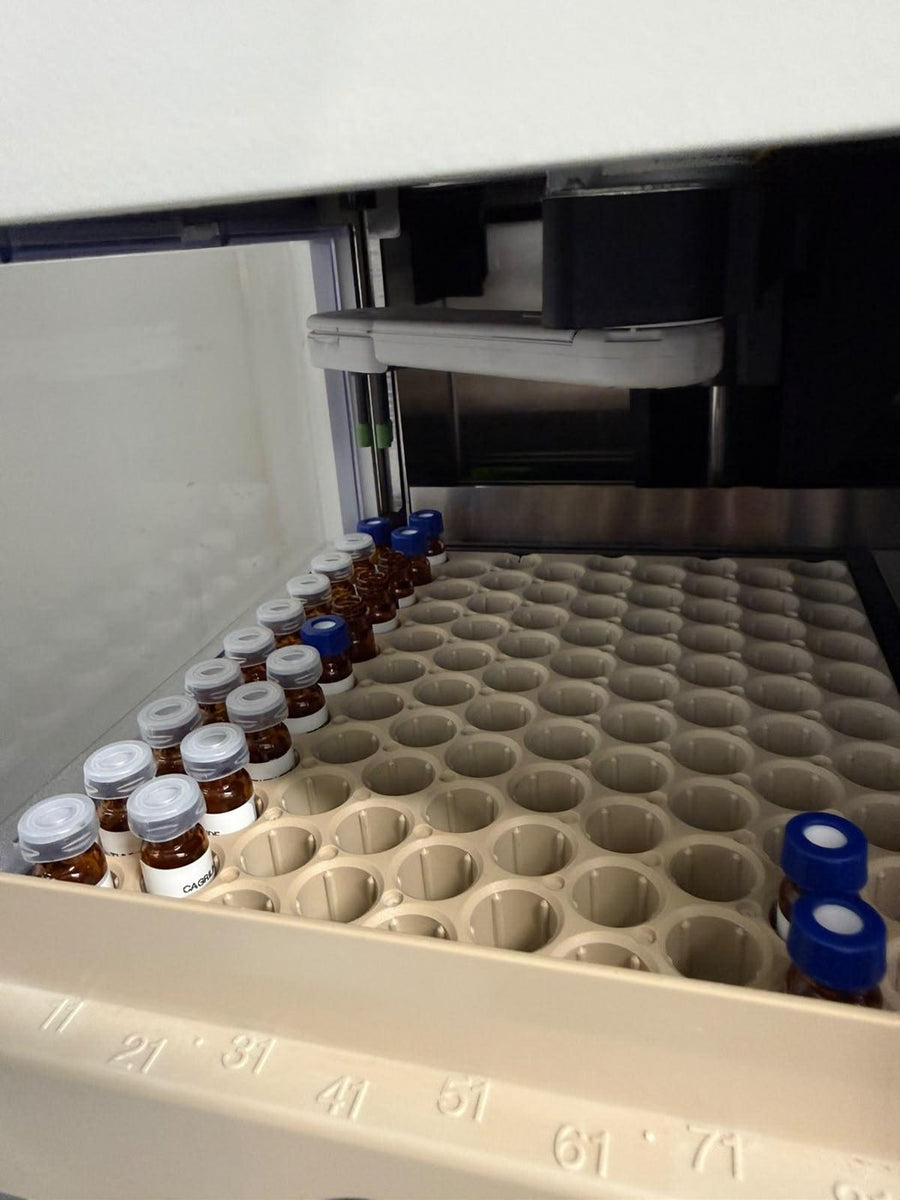
Peptides slowly change with heat, moisture, oxygen and light. Oxidation, for example, adds 16 Da to a molecule and shows up as a new peak. A vial that has been warm in transit or opened can test lower months later.

The preparation
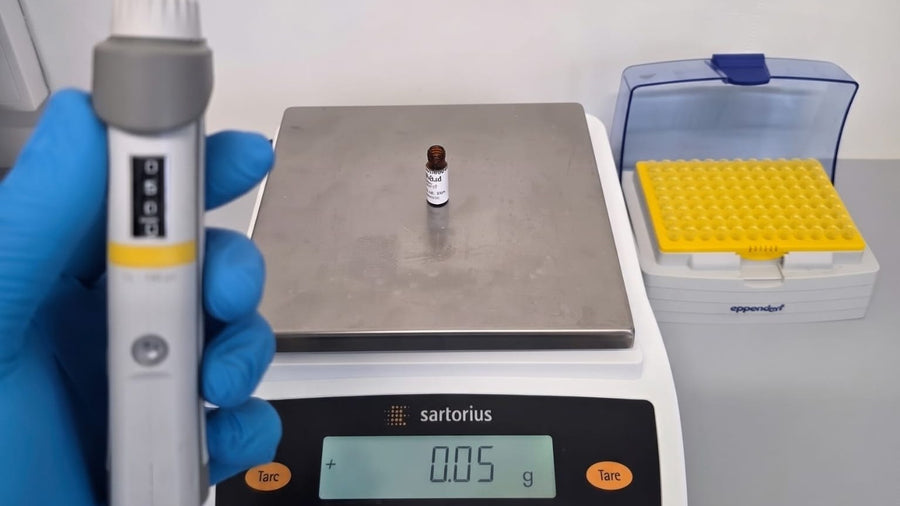
How much is dissolved and injected changes the shape of the main peak. We prepare every sample by weight, to the same concentration based on the label amount, so that results stay comparable from run to run.
So do not only ask "what purity did the lab report?", but also "how was it measured?" Our method is on Testing Services.